Skip to product information
1 of 7

Metellme

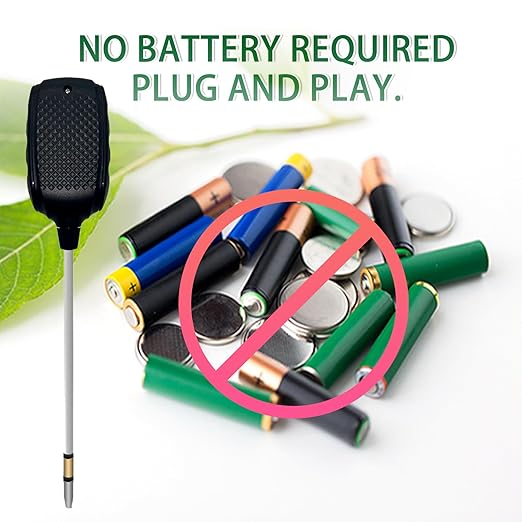
3 in 1 Soil Tester,Soil Moisture/Fertility/PH Tester for Garden nutrients,Lawn,Gardening,Farming, Indoor and Outdoor Plants,Soil PH Meter Kit (3 in 1 Soil Meter)

3 in 1 Soil Tester,Soil Moisture/Fertility/PH Tester for Garden nutrients,Lawn,Gardening,Farming, Indoor and Outdoor Plants,Soil PH Meter Kit (3 in 1 Soil Meter)

Regular price $9.58 USD
Regular price Sale price $9.58 USD
Sale Sold out
Quantity

About This

  • 3 in 1 soil tester: Soil Moisture/Fertility/PH Meter
  • 1. Humidity: Toggle the instrument's button to MOIST,MOIST is the moisture key, corresponding to the instrument is moisture, the left is dry, the right is wet.① Values 1-3 (red part) indicates that it is dry and needs watering.②Values 4-7 (green part) indicate that the humidity is appropriate, adjust the watering time according to the plant species.③ Values 7-10 (blue part) red part, indicating too wet.
  • To use, insert the probe more than two-thirds of the way into the soil and take a reading in about 3 seconds.If you encounter resistance, try again elsewhere.Slide the switch and check the ‘ Soil Moisture/Fertility/PH ’ result in the display window.
  • Note: If the soil is too dry, you need to wet the soil with water to measure the value, otherwise it may cause the instrument needle will not work, the instrument detects humidity in the range of 1-10, if the test environment soil humidity is lower than 1 or more than 10, it may lead to the instrument does not work properly!
  • 2. Soil PH:Soils can be naturally acid or alkaline, and this can be measured by testing their pH value. Having the correct pH is important for healthy plant growth.Being aware of the long-term effects of different soilmanagement practices on soil pH is also important.
  • Soil pH is considered a master variable in soils as it affectsmany chemical processes.lt specifcally affects plantnutrient availability by controlling the chemical forms of thedifferent nutrients and inßuencing the chemical reactionsthey undergo. The optimum pH range for most plants is between 7 and 4.
  • 3.Fertility: Toggle the button on the instrument to FERTILITY ①Fertility weakly pointing left (yellow part) ②Fertility suitable pointing to the middle (green part) ③Excess fertility pointer points to the right (red part)

Overview

  • Color : Black
  • Brand : Metellme
  • Item Weight : 0.1 Kilograms
  • Manufacturer : GuangZhouMeiDeMeiKeJiYouXianGongSi
  • UPC : 702163556072
View full details

What Our Customers Say

Perfect for my apartment!

These compact planters are exactly what I needed for my small balcony. The herbs are thriving and I love having fresh basil at my fingertips!

Great starter kit

As a beginner gardener, this kit made it so easy to start growing my own vegetables indoors. The instructions were clear and everything I needed was included.

Love the design

Not only functional but beautiful too! The minimalist design fits perfectly with my modern apartment decor. My succulents look amazing in these pots.

Space-saving solution

The vertical garden system is genius! I can grow so many plants without taking up floor space. Perfect for city living and my plants are healthier than ever.

Every small space holds the potential for a little green sanctuary

Frequently Asked Questions

Everything you need to know about growing a beautiful garden

The best time to plant vegetables depends on your climate zone. Generally, cool-season crops like lettuce and peas thrive in early spring, while warm-season crops like tomatoes and peppers should be planted after the last frost date.
Most gardens need about 1 inch of water per week, either from rainfall or irrigation. Water deeply but less frequently to encourage strong root growth. Early morning is the best time to water to minimize evaporation and disease.
Loamy soil with good drainage is ideal for most plants. It should be rich in organic matter, have a pH between 6.0-7.0, and retain moisture while allowing excess water to drain. Adding compost annually improves soil structure and fertility.
Companion planting, crop rotation, and encouraging beneficial insects are effective natural pest control methods. Marigolds deter many pests, while ladybugs and lacewings eat aphids. Regular inspection and hand-picking larger pests also helps.