Skip to product information
1 of 9

Moistenland

Upgraded DIY Automatic Drip Irrigation Kit, 15 Potted Houseplants Support, Indoor Watering System for Plants, with Digital Programmable Water Timer

Upgraded DIY Automatic Drip Irrigation Kit, 15 Potted Houseplants Support, Indoor Watering System for Plants, with Digital Programmable Water Timer

Regular price $73.58 USD
Regular price Sale price $73.58 USD
Sale Sold out
Quantity

About This

  • Automatic Drip Irrigation Kit: This kit is a system of water pumps, timers, tubes, and drippers that deliver the proper amount of water to each plant, which helps you avoid both under- and overwatering. It is a compact design for your home potted plant irrigation. vacations, busy schedules, and changing weather conditions can all leave flowers, veggies, and shrubs thirsty. Now Free your hands to water your plants with no worries.
  • Easy DIY Installation: In just 10 minutes, you can install a drip irrigation system for your home potted or hanging plants. The kit includes all necessary accessories - 33 ft of tubing, 15 watering stakes, multiple T-joints, and cross joints - making it easy for you to create your own watering irrigation kit.
  • Scientific Water-Saving Design: Using watering stakes can save at least 70% more water than traditional spray and drip heads. You can spot the water only where the roots need it, preventing water evaporation over time and making the drip system ideal for saving water during drought conditions. Generally, one gallon of water can last for at least three weeks for ten potted houseplants.
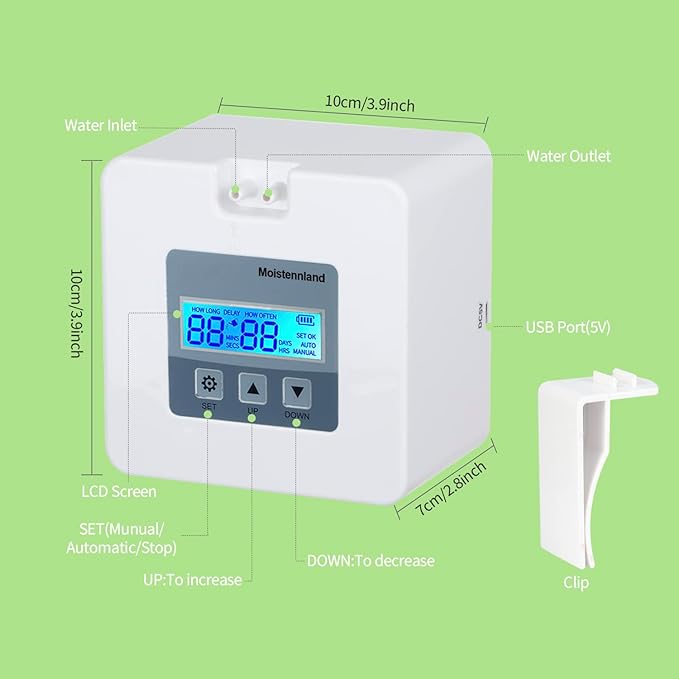
  • Digital Timer Display: Featuring an extra-large LCD screen with bright, easy-to-read text and dial, the kit includes a programmable timer, making it simple to set up your watering schedule. Once the timer is set, the settings are automatically saved to the device, eliminating the need to reset the timer each time you restart the power.
  • Two Power Options: This system can be powered by four AA batteries or Micro USB power. If the USB power fails, the pump will continue to run using AA battery power (if batteries are installed). This feature is excellent for urban patios and balconies where faucets are unavailable.

Overview

  • Brand : moistenland
  • Size : 32.8 feet
  • Style : LCD Version
  • Material : Plastic
  • Model Name : 43217-15092
View full details

What Our Customers Say

Perfect for my apartment!

These compact planters are exactly what I needed for my small balcony. The herbs are thriving and I love having fresh basil at my fingertips!

Great starter kit

As a beginner gardener, this kit made it so easy to start growing my own vegetables indoors. The instructions were clear and everything I needed was included.

Love the design

Not only functional but beautiful too! The minimalist design fits perfectly with my modern apartment decor. My succulents look amazing in these pots.

Space-saving solution

The vertical garden system is genius! I can grow so many plants without taking up floor space. Perfect for city living and my plants are healthier than ever.

Every small space holds the potential for a little green sanctuary

Frequently Asked Questions

Everything you need to know about growing a beautiful garden

The best time to plant vegetables depends on your climate zone. Generally, cool-season crops like lettuce and peas thrive in early spring, while warm-season crops like tomatoes and peppers should be planted after the last frost date.
Most gardens need about 1 inch of water per week, either from rainfall or irrigation. Water deeply but less frequently to encourage strong root growth. Early morning is the best time to water to minimize evaporation and disease.
Loamy soil with good drainage is ideal for most plants. It should be rich in organic matter, have a pH between 6.0-7.0, and retain moisture while allowing excess water to drain. Adding compost annually improves soil structure and fertility.
Companion planting, crop rotation, and encouraging beneficial insects are effective natural pest control methods. Marigolds deter many pests, while ladybugs and lacewings eat aphids. Regular inspection and hand-picking larger pests also helps.